Pages

Wednesday, March 14, 2012

Chocolate Covered Potato Chips: National Potato Chip Day

Today is National Potato Chip Day. If you like your chocolate caramel truffles with sea salt, you'll love Chocolate Covered Potato Chips. It's all about the sweet and salty. And, with St. Patrick's Day coming up, this will be the perfect treat! Following are two recipes for Chocolate Covered Potato Chips--and a recipe for Double Chip Cookies: Potato Chip Chocolate Chip Cookies.

I love Potato Chips. No wonder. It's America's #1 Snack Food. I grew up with Wise Potato Chips, probably because they were locally made. Here's a bit of Potato Chip history from Food History. If you haven't visited this website, it's a must. So much information.

As a world food, potatoes are second in human consumption only to rice. And as thin, salted, crisp chips, they are America's favorite snack food. Potato chips originated in New England as one man's variation on the French-fried potato, and their production was the result not of a sudden stroke of culinary invention but of a fit of pique.

In the summer of 1853, Native American George Crum was employed as a chef at an elegant resort in Saratoga Springs, New York. On Moon Lake Lodge's restaurant menu were French-fried potatoes, prepared by Crum in the standard, thick-cut French style that was popularized in 1700s France and enjoyed by Thomas Jefferson as ambassador to that country. Ever since Jefferson brought the recipe to America and served French fries to guests at Monticello, the dish was popular and serious dinner fare.

At Moon Lake Lodge, one dinner guest found chef Crum's French fries too thick for his liking and rejected the order. Crum cut and fried a thinner batch, but these, too, met with disapproval. Exasperated, Crum decided to rile the guest by producing French fries too thin and crisp to skewer with a fork. The plan backfired. The guest was ecstatic over the browned, paper-thin potatoes, and other diners requested Crum's potato chips, which began to appear on the menu as Saratoga Chips, a house specialty.


In 1860 George opened his own restaurant in a building on Malta Avenue near Saratoga Lake, and within a few years was catering to wealthy clients including William Vanderbilt, Cornelius Vanderbilt, Jay Gould, and Henry Hilton. His restaurant closed around 1890 and he died in 1914 at the age of 92.

The idea of making them as a food item for sale in grocery stores came to many people at around the same time, but perhaps the first was William Tappendon of Cleveland, OH, in 1895. He began making chips in his kitchen and delivering to neighborhood stores but later converted a barn in the rear of his house into "one of the first potato chip factories" in the country.

At that time, potatoes were tediously peeled and sliced by hand. It was the invention of the mechanical potato peeler in the 1920s that paved the way for potato chips to soar from a small specialty item to a top-selling snack food. For several decades after their creation, potato chips were largely a Northern dinner dish.
In 1921, Bill and Sallie Utz started the Hanover Home Brand Potato Chips in Hanover, Pennsylvania. Salie Utz used her knowledge of good Pennsylvania Dutch cooking to make the chips in a small summer house behind their home. The hand-operated equipment made about fifty pounds of potato chips per hour. While Salie stayed home making chips, Bill delivered them to "mom and pop" grocery stores and farmer's markets in the Hanover, PA and Baltimore, MD area.

In Monterey Park, California the Scudders company started making potato chips in 1926. Laura Scudder is credited with developing the wax paper bag for potato chips which made a wider distribution possible because of its preserving properties. Prior to this bag potato chips were dispensed in bulk from barrels or glass display cases.

In 1932, Herman Lay founded Lay's in Nashville, Tenn., which distributed potato chips from a factory in Atlanta, Ga. Herman Lay, a traveling salesman in the South, helped popularize the food from Atlanta to Tennessee. Lay peddled potato chips to Southern grocers out of the trunk of his car, building a business and a name that would become synonymous with the thin, salty snack. Lay's potato chips became the first successfully marketed national brand.

The industry that George Crum launched in 1853 continues to grow and prosper. Potato chips are America's favorite snack.

What are you favorite Potato Chips?

You can now buy Chocolate Covered Potato Chips, but you might want to make your own to celebrate National Potato Chip Day--or to celebrate St. Patrick's Day! To make either of the two Chocolate Dipped Potato Chips, be sure and choose a ridged potato chip. They're stronger and will work better. As always, use the very best chocolate for the very best results and taste! Depending on how you feel, you can dip or paint half or all of the chip. Here are two ways to do this. Lovely to have the salt and sweet.

Chocolate Covered Potato Chips I

24 ounces dark (65-75% cacao) chopped chocolate
16-ounce bag ridged potato chips


Line a baking sheet with aluminum foil. Set aside.
Melt chocolate in adouble boiler over simmering water or put chocolate in large microwave-safe bowl and microwave in one-minute increments until melted, stirring after every minute to prevent overheating.
Dip bristles of large pastry brush in melted chocolate and paint one side of potato chip with thin layer of chocolate. Place potato chip chocolate-side up on prepared baking sheet.
Repeat painting with remaining chocolate and chips.
Let chocolate covered chips set up.
Chips are best eaten soon right after made, to keep crunchiness of the chips.

Chocolate Covered Potato Chips II

1 pound dark chocolate, chopped
8 cups ridged potato chips

Prepare a cookie sheet with waxed paper.
Melt 3/4 of the chocolate in top of double boiler over simmering water (or saucepan on top of saucepan)--or melt in microwave as above. Stir until chocolate melts. Add rest of chocolate and stir until melted.
Using tongs, dip potato chips one at a time into chocolate. Place on waxed paper starting at point farthest from you and working way in so you don't drip on finished chips.
Cool until set.

And here's a recipe for Double Chip Cookies from the 
Wise Potato Chip Cookbook: Recipes that Pep Up Meals


Double Chip Cookies

Tuesday, March 13, 2012

Eating Key West & Chocolate Lava Cake Recipe: Lucy Burdette

Once again my worlds of mystery and chocolate collide. Today I welcome mystery author Lucy Burdette, aka Roberta Isleib.

Lucy Burdette is the author of the Key West food critic mysteries, including AN APPETITE FOR MURDER and DEATH IN FOUR COURSES (coming in September.) Her short story, “The Itinerary” (written as Roberta Isleib), has been nominated for an Agatha award.

Eating Key West by Lucy Burdette:

While researching the Key West food critic mystery series (AKA procrastinating,) I came across this fascinating tidbit of information: The state of Massachusetts has a state bean (navy), a state dessert (Boston cream pie), a state cookie (chocolate chip), and a state donut (Boston cream.) My own home state—Connecticut—turned out to be a great disappointment, with no state foods whatsoever. No state fruit, no state vegetable, no state dessert. Nothing. Luckily Florida, the setting for my new series, came through with an official state pie. Key lime, of course.

As I’ve gone about eating my way through Key West (also in the name of research), I’ve tried any number of Key lime pies, cheesecakes, ice creams, and yogurts. Here’s one of my favorites, the fabulous pie served with a little raspberry sauce at Louie’s Backyard. (The view from the dining area is terrific too!)

But I’ve also come across some other amazing desserts. One of my favorites bears no relationship to the official state pie—the bread pudding at Santiago’s Bodega—served with blueberries and a dollop of vanilla ice cream. (I don’t even like bread pudding and I’m crazy for this dish.)

On special days, I satisfy my hankerings with one of the sweet crepes at La Creperie on Petronia Street. There, French pastry chefs Yolande and Sylvie dish up desserts like this red velvet crepe, made with raspberry chocolate ganache, English custard ice cream, and raspberry coulis.

But if I develop a yearning for sheer chocolate madness, I make my way through the streets of Old Town Key West to Michael’s Restaurant. There, as the waiter takes down your dinner preferences, he will warn you that if you’d like a chocolate lava cake for dessert, you’d best put your order in now. And we always do.

Chocolate Lava Cake (adapted from Epicurious)

6 oz. bitter or semi-sweet chocolate, chopped
3/4 cup unsalted butter, diced
3 large eggs and 3 egg yolks
6 TBSP sugar
1/8 tsp salt
6 TBSP all purpose flour

Preheat the oven to 350. Butter six 3/4 cup custard or soufflé cups. Stir chocolate and butter together in heavy saucepan over medium-low heat until melted and smooth. Cool to lukewarm. With a mixer, beat the eggs, the yolks, the sugar, and salt until pale yellow and thick (about 5 minutes.) Fold the cooled chocolate into this mixture and sift the flour over the top. Fold in. Divide the batter into the prepared cups and place them on a baking sheet. Bake until set but the centers are still soft. Serve warm with whipped cream or vanilla ice cream.

Monday, March 12, 2012

Girl Scouts 100th Anniversary: Thin Mint Truffles

Today is the is the 100th Anniversary of the founding of the Girl Scouts. The original registration book shows 102 girls enlisted within just a few weeks. By 1914 there were 1000 Girl Scouts, then 5000 just a year later. By 1917, enrollment had swelled to 13,000, and today the girls number 3.3 million nationwide.

I was both a Brownie and a Girl Scout, and I'm a huge fan of Thin Mints (it's Girl Scout Cookie Time), so I had to do a post on this important Anniversary. As a Brownie and Girl Scout, I trudged around selling cookies door to door by myself. There were no cookies being sold on street corners, nor were there any fathers (or mothers) coercing colleagues or employees to buy multiple boxes, although as a pediatrician, my father could have sold a lot of boxes for me. No, we were responsible for the sale--and the delivery- of those boxes. Since I wanted to sell a lot in order to be the 'highest' seller in my area (I never was), I remember going very far afield one year. My mother actually had to help me deliver that year, and she was astounded by how far I had gone. We lived in the city, where neighborhoods changed block by block. No matter, it never occurred to me not to knock on any doors. Good thing I didn't read adult mysteries or watch the news then. I must have been a Brownie, because I was only a girl scout after we moved to the suburbs. So I was under 10. Times were different. I wore my uniform, and I had no fear. Kind of like superwoman only my costume was more modest. Still it protected me! In those times, it was all about selling the most cookies, not worrying about the deviant at the door. I got through my sales unscathed except for the development of my fondness for Chocolate Mints, now known as Thin Mints. Yum! Thin Mints make up over 24% of Girl Scout Cookies sales. No surprise to me. 

A little history of the Girl Scouts. Juliette Gordon Low rounded up her first troop on March 12, 1912, a time when few women held jobs and only six states allowed them to vote. "Girl Scouting from its inception was forward-looking. Although it was  rooted in domesticity, it always opened further paths to women."
The first Girl Scout handbook, published in 1913, encouraged girls to shoot rifles and gave instructions for tying up intruders. My kind of group! The original Scouts took camping trips and played basketball on outdoor courts shrouded from public view by curtains hung so that men couldn't glimpse the girls in their bloomers. O.K., I'm not much for group sports, but luckily by my time that wasn't necessary since we had gym in school. Outdoor activity also included gardening, and learning the difference between poisonous and non-poisonous mushrooms was in the first handbook. Good to know.

Lest you think that the first Girl Guides in the US (later changed to the Girl Scouts) were not also being trained to be wives and mothers, Juliette Gordon Low had the Girls learn about cooking and preserving food. She wanted them to know how to run a sterile kitchen. She taught about nursing—taking care of invalids and sick children—and sewing. Anything that a wife and mother should do she thought she could train her girls to do better.

Low understood how it was possible that any woman might find herself in the situation of needing to take care of herself. So, she emphasized career training for girls. Some of the early badges were about flying, typing, telegraph skills and farming.

Hillary Rodham Clinton was a Girl Scout, as was Laura Bush. Barbara Walters, Peggy Fleming, Venus Williams and Mariah Carey all wore Girl Scout uniforms, as did at least seven astronauts, 13 current and former members of Congress and numerous executives and CEOs.

I'm proud to count myself within the ranks!

Girl Scout Cookies

The first cookie sales by an individual Scout unit was by the Mistletoe Troop in Muskogee, Oklahoma in December 1912. In 1922, the Girl Scout magazine The American Girl suggested cookie sales as a fund-raiser and provided recipes. The first Girl Scout cookie recipe was a sugar cookie. 

Early Girl Scout Sugar Cookie® Recipe

1 cup butter
1 cup sugar plus additional amount for topping (optional)
2 eggs
2 tablespoons milk
1 teaspoon vanilla
2 cups flour
1 teaspoon salt
2 teaspoons baking powder


Cream butter and the cup of sugar; add well-beaten eggs, then milk, vanilla, flour, salt, and baking powder. Refrigerate for at least 1 hour. Roll dough, cut into trefoil shapes, and sprinkle sugar on top, if desired. Bake in a quick oven (375°) for approximately 8 to 10 minutes or until the edges begin to brown. Makes six- to seven-dozen cookies.


In 1934, Girl Scout Cookies went commercial when the Girl Scouts of Greater Philadelphia Council (my council, but not my time) became the first council to sell commercially baked cookies in the city's gas and electric company windows. By 1937, over 125 councils nationwide held cookie sales, with the trefoil-shaped Shortbread as the first official Girl Scout Cookie. Cookie Sales taught girls leadership and life skills such as entrepreneurship, money management and goal setting.

Despite flour, butter and sugar shortages caused by World War II, the Girl Scout Cookie program prevailed. In 1942 there were 48 cookies per box, available in either vanilla or chocolate. Customers were limited to two boxes during some war years.

In 1951, two other Girl Scout Cookies were introduced to the world—in addition to Shortbreads, the public could also purchase cream-filled Sandwiches and in 1954 Chocolate Mints (now called Thin Mints) were introduced. Some bakeries even offered optional flavors to their respective councils.

Read more about Girl Scout Cookies.

I stopped by the bank the other day, and there were Girl Scouts selling cookies. I resisted this time, as I already have a supply of Thin Mints purchased from neighborhood children. However, if you don't run into any Girl Scouts (how can you avoid them?), you can make this home-made version of Thin Mints that Pattie Tierney posted on Dying for Chocolate last year.

And I found this great sign on etsy that I must have.

Of course, I just to post at least one new recipe here. You must try Thin Mint Truffles from The Hungry Housewife. This recipe calls for a final coating of cookie crumbs, but you can also dip the truffles in dark chocolate with chocolate sprinkles or roll them in cocoa.

Thin Mint Truffles

1/2 box of Thin Mint Girl Scout Cookies (1 sleeve) + 3 cookies
4 oz Cream Cheese, softened

In a food processor, process 1 sleeve of Thin Mints Girl Scout Cookies until they resemble course sand.
Transfer the mixture to a large bowl and add the cream cheese. Mix together by hand until fully incorporated. Scoop out by the tablespoon (or use a small scoop) and roll into a nice ball in your hands to form truffles.
Pulse the extra 3 cookies in the food processor until it resembles course sand and place in a small bowl. Roll the truffles in the processed cookie crumbs to coat.
Chill coated truffles for at least an hour to set up.... or overnight for flavors to really develop with the cream cheese.

Sunday, March 11, 2012

Chocolate Revelations: Mounds of Brownies

Today I welcome Cece Brune, cookbook author and mystery reader. Always love when my worlds of mystery and chocolate collide. Cece shares Baking and Chocolate tips and a recipe for Mounds of Brownies.

Cece Brune: 
Chocolate Revelations 

I was delighted that Janet asked me to submit a guest post. I love CHOCOLATE and I am a mystery reader…a wonderful intersection of her blogging. I also maintain two blogs; www.texasjot.blogspot.com and www.yourfashionplate.blogspot.com. Texas Jot is about my life in Texas (and my reading list) and Fashion Plate has recipes and retro Barbie fashions that I have been designing for my grand-daughter. I am the author of Texas Manners: A Guide to Gracious Living, an avid quilter and have an Etsy store. I hope you enjoy my baking tips and recipe for Mounds of Brownies. My cookbooks are available on the blogs or at www.chocolatecrimes.com

Mystery of the 9x13-inch Pan

As the author of two cookbooks, Chocolate Crimes and Chocolate Rehab, I spend an inordinate amount of time in my kitchen. While researching for my first cookbook, I stumbled upon the mystery of the 9x13-inch pan. If you started baking in the 1960’s, you probably have a Pyrex pan that measures 7 ¼ x11 inches. Maybe you have one from the 1980’s measuring 7 ½ by 12 inches. If you are a modern baker, you probably own a real 9x13-inch pan.

Despite the dimension change of the “9x13-inch” pan, there has been no recipe adjustment over the years. If your mom’s recipe is over-cooking in your modern-day size pan, reduce the baking time by five minutes and check at one minute intervals to achieve your prime result.

Most of my recipes will work in any size “9x13” pan, but occasionally there is one that I indicate must be made in the full-size pan.

Who Lied About the Microwave?

I do own a double boiler, but I have found that melting chocolate in the microwave is faster and makes less mess. JUST GO SLOWLY. Even though the chocolate may look like it is still formed in a solid piece, give it a stir to see how soft it has become. Be sure to use a high heat spatula. (Yes, I’ve melted three of the other kind.) White chocolate is a little more temperamental, but it will work if you are patient. The safest method for melting chocolate is to put the chocolate (white or dark) in a glass bowl on a heating pad and let it melt while you are doing something else. It is also a good way to keep chocolate at the correct temperature for dipping or drizzling.

Passion in My Pantry

With chocolate, you get what you pay for and the difference will show up on your taste buds. In some recipes, a generic chocolate won’t make much difference. When chocolate is the featured performer, you will be happy that you used a premium chocolate bar.

For years I baked exclusively with Hershey’s cocoa powder, but if you want a real chocolate jolt, try European dark cocoa. It makes a jet black frosting, so don’t go overboard.

I have numerous recipes that call for mocha powder/espresso. You can use any brand you like. You’ll be surprised at what a boost this gives chocolate items without imparting any coffee flavor. Finally, I must divulge the truth about white chocolate. Unless you purchase a product containing cocoa butter, your “white chocolate” is just sweet white stuff, guilty of impersonation.

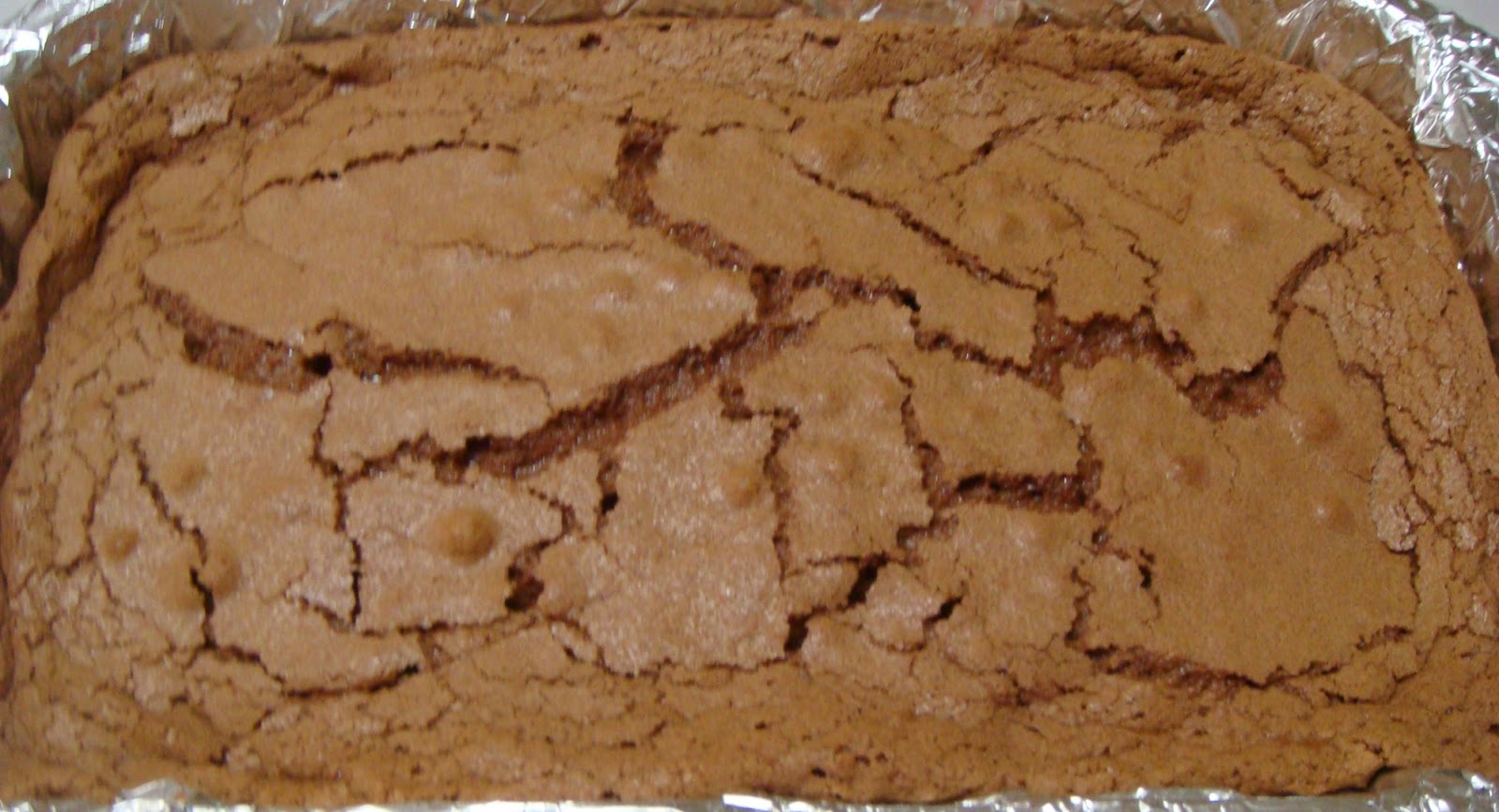
Mounds of Brownies
Cut these into tiny pieces. They are so rich—one bite is all you need. I make these for cookbook signings and they are a crowd favorite.

Cream:
¼ cup unsweetened cocoa powder
½ cup (one stick) butter
1½ cups granulated sugar

Until combined. Add:
3 eggs
1 teaspoon vanilla extract
½ teaspoon salt

Beat until smooth. Add:
1 cup flour

Place in 9x13 inch pan and bake at 350° for 27 minutes.

Remove from oven and top with a mixture of:
14 ounces sweetened condensed milk
2¼ cups shredded coconut

Return to oven and bake 20 more minutes. Top with chocolate icing.

Icing
In microwave, melt:
4 ounces bittersweet chocolate

for 1 minute. Add:

½ cup whipping cream
1 cup confectioners’ sugar